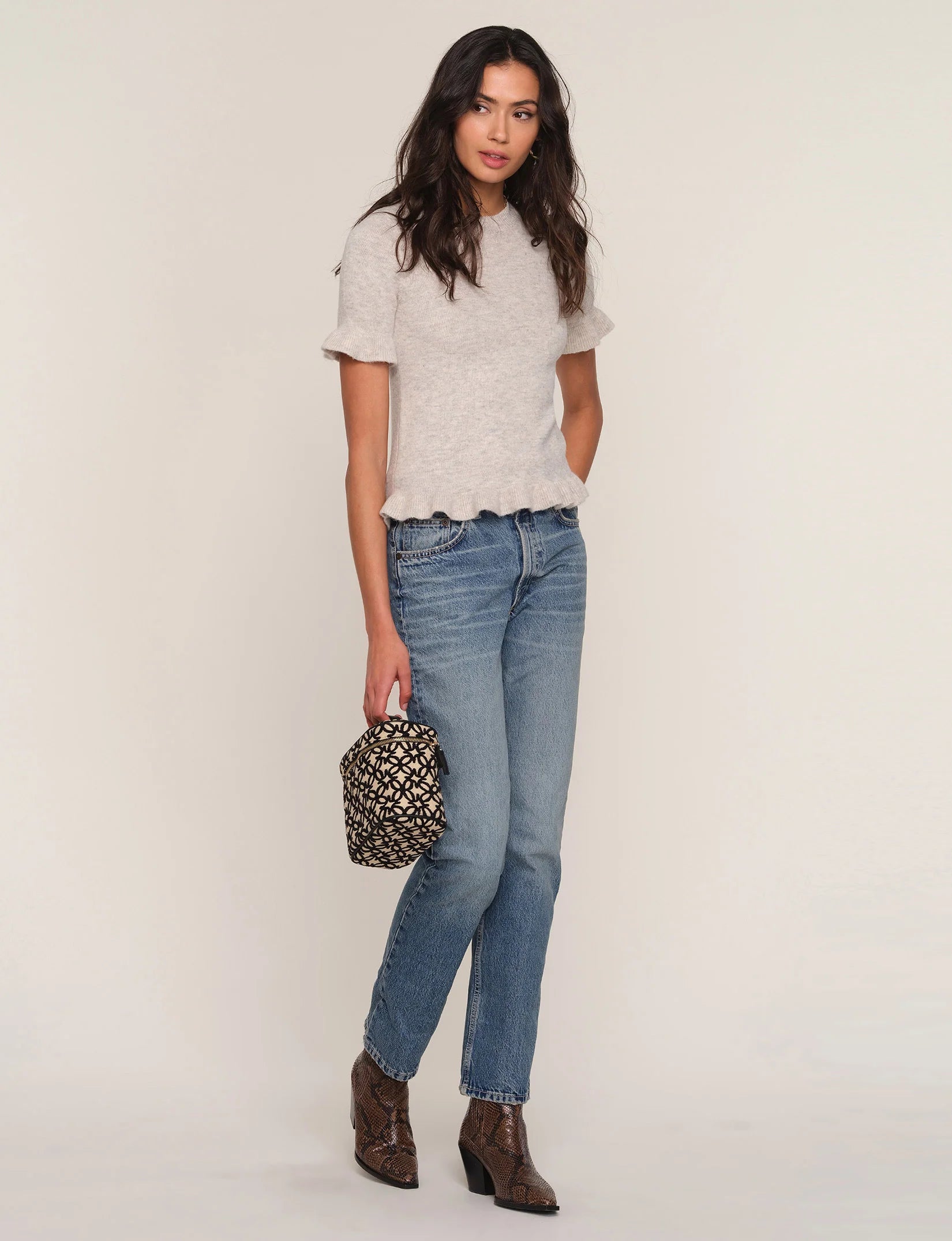
Mixing patterns doesn't require rules so much as smart choices. This guide breaks pattern mixing into clear, usable strategies—scale, color relationships, and anchor pieces—so you can pair prints in ways that look intentional rather than random.
Start with Scale: Big + Small
Begin by combining patterns of different scales to create visual balance. A larger, more graphic print reads as a block of color from a distance and pairs well with a finer, more detailed print without competing. For example, a dress with a bold geo or florals would settle against a delicate pinstripe or micro-dot accessory.
Tie Colors Together, Not Necessarily Patterns
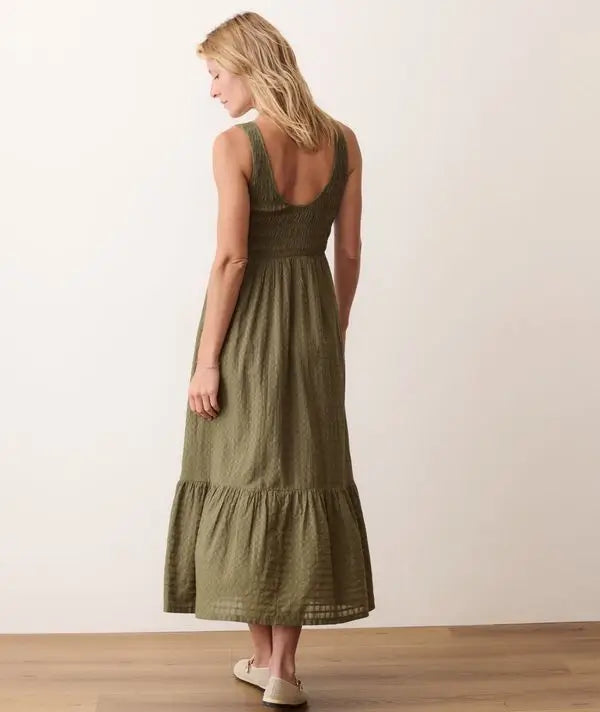
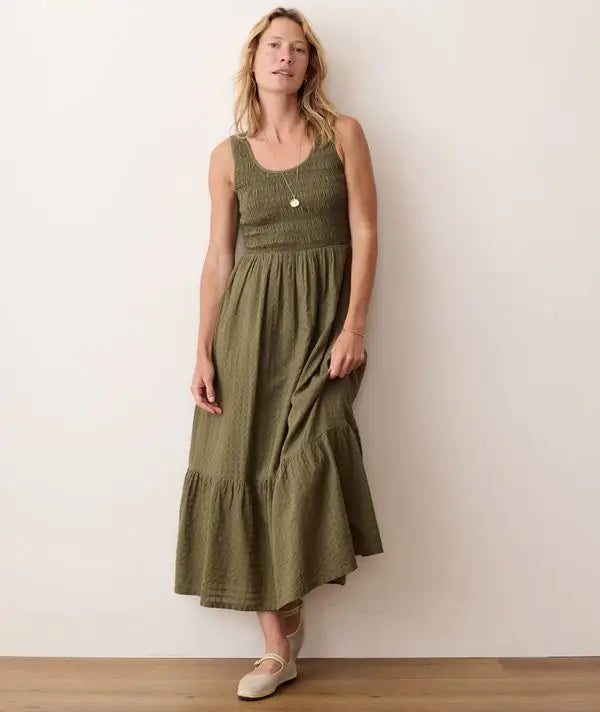
Choose one or two colors that appear in both patterns to create a visual through-line. This works even when the prints differ in style—floral and geometric combinations can read harmonious if they share a hue family. The Olive Tessa Midi Dress acts as a great color anchor: its rich solid tone can ground a blue geo or lighter patterned layer so the overall outfit feels connected.
Use One Neutral Anchor and One Textural Element
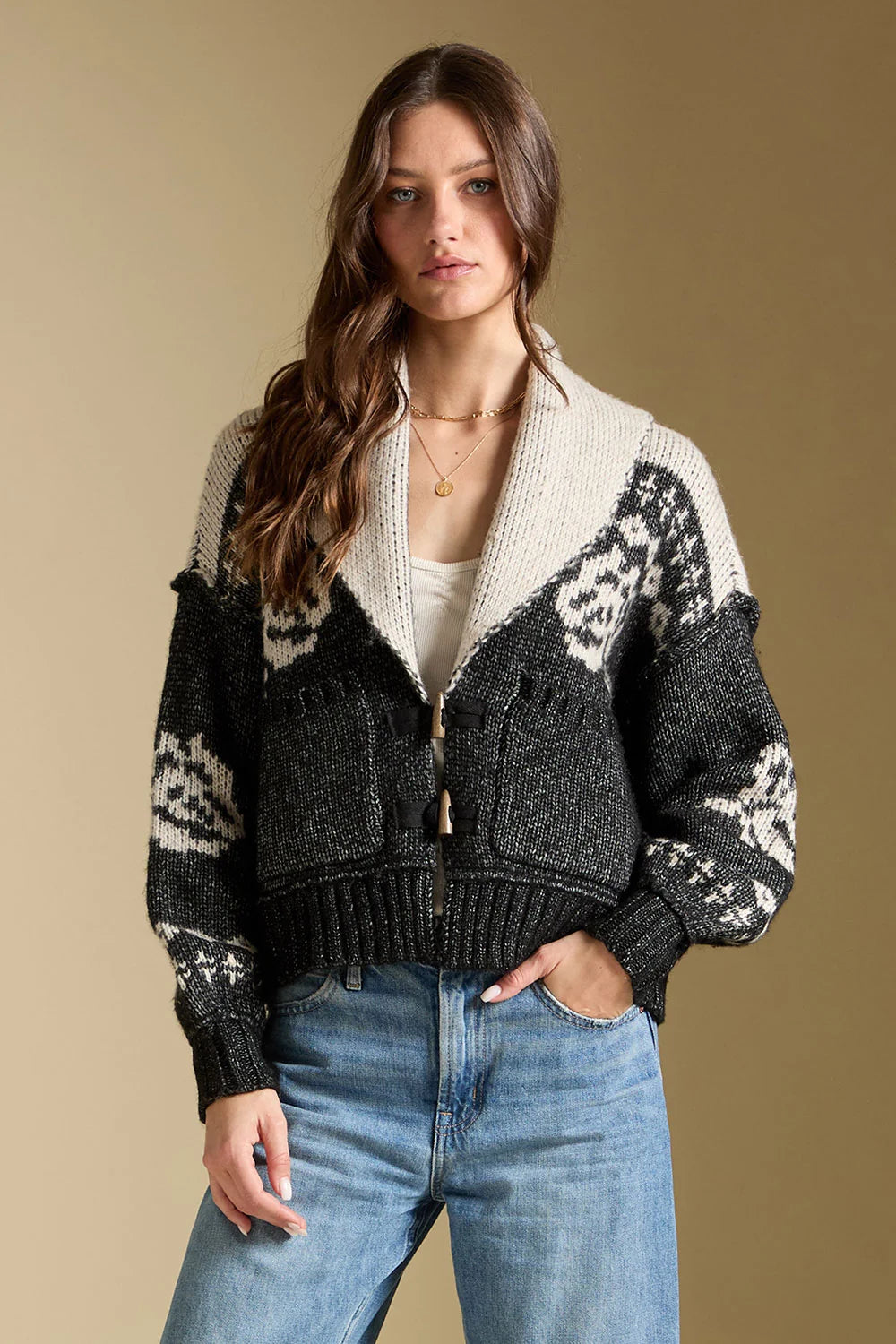
Introduce a neutral solid or a textural fabric to stabilize two competing prints. A neutral piece—whether a jacket, shoe, or bag—provides breathing room so the eye has a place to rest between patterns. Texture can play a similar role: a woven or ribbed fabric in a neutral shade will soften transitions and add depth without adding another visual motif. In practice, a smocked dress with a patterned print can be paired with a neutral textured cardigan or belt to keep the look cohesive while letting the pattern remain the focal point.
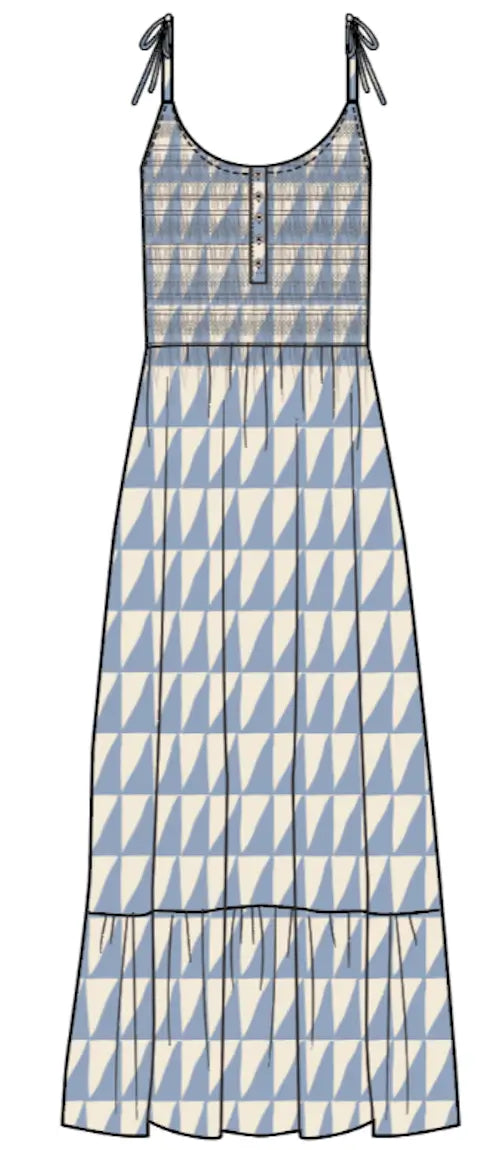
When working with garments that have built-in shaping, like the Carmen Smocked Dress, remember the smocked bodice already introduces texture and structure. Let that feature be your design cue: if the bodice is the main visual interest, pair it with a subtler patterned skirt or accessory rather than competing prints at the torso.
Intentional Placement and Repetition
Think about where patterns sit on the body. Placing a busier pattern on the lower half and a calmer print on top can balance proportions; conversely, a dramatic pattern near the face draws attention upward. Repeating a motif—such as echoing a small geometric in jewelry or a scarf that picks up a color from a dress—helps the ensemble read as deliberate.
If you want a fully patterned look, repeat one element (color, motif, or scale) at least twice across the outfit to create rhythm. For instance, pair a blue-printed piece like the Carmen Smocked Dress with an accessory that repeats the same blue tone to unify the ensemble.
Pattern mixing is a practice in moderation and intention: prioritize scale, shared color, and a neutral or textural anchor. Start small—mix one printed garment with a patterned accessory—and build your confidence from there.